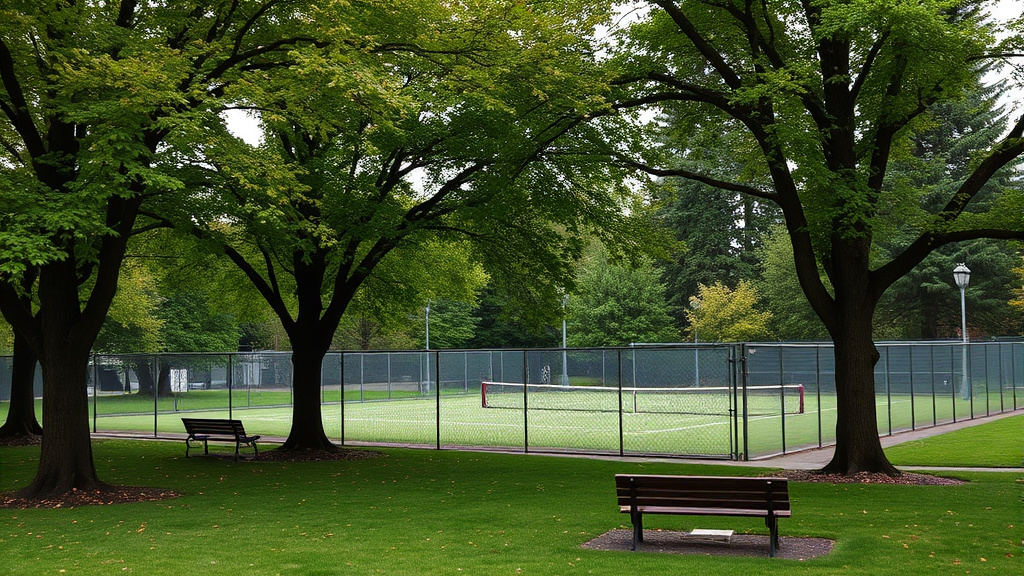
Lombard Avenue between 24th and 25th reads like any other stretch of central Everett until the trees give it away. The canopy over Clark Park is older and heavier than the street trees around it, which makes sense once you know the city bought the first of this ground in 1894. It is the oldest park Everett owns, and the neighbourhood association that looks after it has been running events on the lawn for years.
A park the city bought in 1894
Clark Park fills the block between Lombard and Oakes, and its civic address sits at 2400 Lombard Ave. For most of the last century the centrepiece was a gazebo put up in 1921 to a design by Benjamin Turnbull, built so bands had somewhere to play. That structure is gone. The city council voted in June 2024 to take it apart and put it into storage, and crews began dismantling it that November. An off-leash area was the replacement, and the city's own park listing now shows off-leash space alongside the playground and tennis courts.
The six courts on the Oakes side stayed open through that work. Everett High School teams use them and so does anyone who turns up, and a mural went onto the court wall in 2021. The playground sits on a rubber surface under the shade. Gates are open from six in the morning until dusk. Clark Park went onto the Everett Historic Register in 1993, which is part of why the gazebo decision took five years of argument before anything moved.
Where Bayside starts and stops
Bayside is easy to draw. The association puts its northern edge at 19th Street and its southern edge at Hewitt Avenue, with Broadway holding the east side and Possession Sound the west. That makes it a narrow slice running down to the water, and it means Clark Park sits comfortably inside it rather than on a boundary.
Housing in that slice went up early. Historic Everett runs a walking tour through these blocks for a reason: a good share of the stock dates to the first decades of the twentieth century, when the mills were hiring and the city was filling in its grid. Those houses have been re-roofed, re-sided and re-plumbed in stages ever since. What tends not to get done in stages is the electrical system, and that is where owners of older Bayside houses run into surprises.
The wiring under a hundred-year-old roofline
A house built around the time the gazebo went up was wired for a few lights and almost nothing else. Three things commonly turn up in that vintage of Everett housing stock. Knob-and-tube runs still carrying circuits in the attic or under the floor. Two-prong receptacles with no equipment ground, which is why so many kitchen counters end up with an adapter and an extension cord. And a service panel sized for a household that owned a radio rather than a heat pump, an induction range and two cars that want charging overnight.
None of that is an emergency on its own. A knob-and-tube circuit that has never been disturbed, never been buried in blown-in insulation and never been asked to carry a space heater can sit there quietly for decades. The trouble starts when a later owner adds load to a system that was never rebalanced, or when insulation gets packed around conductors that were designed to shed heat into open air. The honest answer in most of these houses is that the panel and the branch circuits need looking at together, not one at a time.
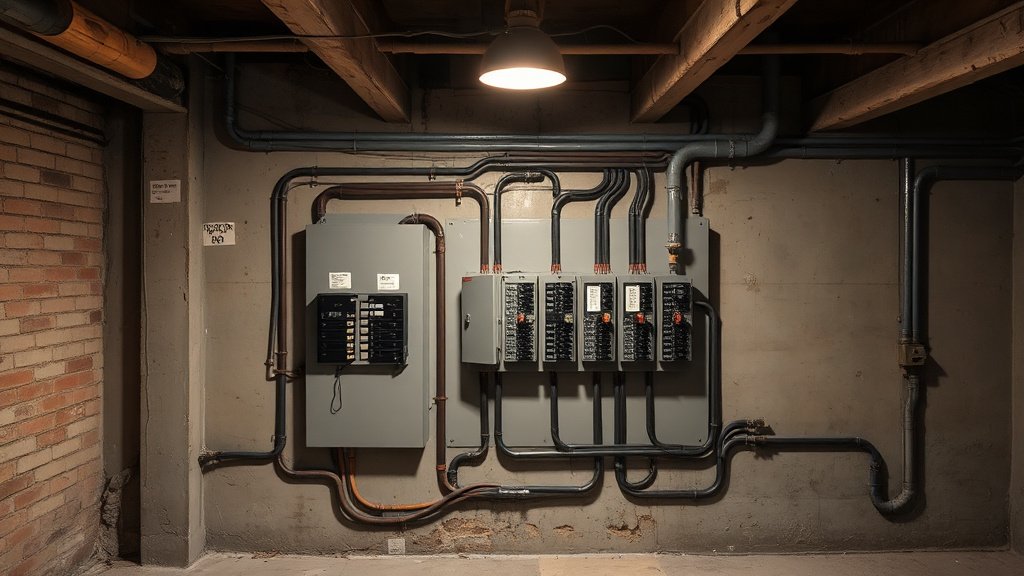
Mid-century additions bring their own quirk. Aluminium branch wiring showed up in a lot of Pacific Northwest building during the late sixties and seventies, and where it was terminated on devices never rated for it, the connections can loosen over time. An electrician looking at a house from that era checks terminations rather than assuming the wire itself is the problem.
Permits, licences and who is allowed to touch a panel
Electrical work in Washington is licensed at the state level through Labor and Industries, and panel changes and new circuits are permitted and inspected rather than left to the owner's judgement. That matters when you are hiring. A plumbing contractor and an electrical contractor are separate licences, and a company holding both has to carry both. Some local firms have added that second trade in recent years, as Danika Plumbing & Electric Adds Licensed Electricians to Its Everett, WA Plumbing Team set out when one Everett contractor brought electricians onto a team that had been plumbing-only since 2009.
For an owner, the practical value of one company holding both tickets is narrow but real. It shows up when a job crosses trades: a water heater swap that needs its circuit re-landed, a bathroom remodel where the vent fan, the lights and the supply lines all land in the same ceiling cavity, a basement conversion where the panel and the drain stack are a metre apart. Scheduling two contractors around one inspection window is the part that usually goes wrong, and the same reasoning applies whether you are reading about how to compare local inspection providers or hiring for any other trade in this city.
Ask for the licence number and check it. Ask whether the permit is being pulled by the contractor or expected of you. Ask what happens to the drywall. Those three questions sort out most of the field before price enters the conversation, and they work the same way for property surveys on older Everett buildings as they do for a service upgrade.
Getting from Clark Park over to Airport Road
If you are standing at the tennis courts on the Oakes side of Clark Park, the shop Danika Plumbing & Electric runs on Airport Road is a straight run south out of Bayside. The route below starts at the park and ends at their office.
Danika Plumbing & Electric
11015 Airport Rd
Everett, WA 98204
(425) 374-1557
Clark Park will look different for a while yet as the new use settles in and the grass recovers. The houses around it will not change at all, which is rather the point of a historic register. Whatever is behind their plaster stays behind their plaster until somebody decides to look.